A fairy tale by the Brothers Grimm

The Elves and the Shoemaker

age 3+ · 4 min read

Read in two languages:

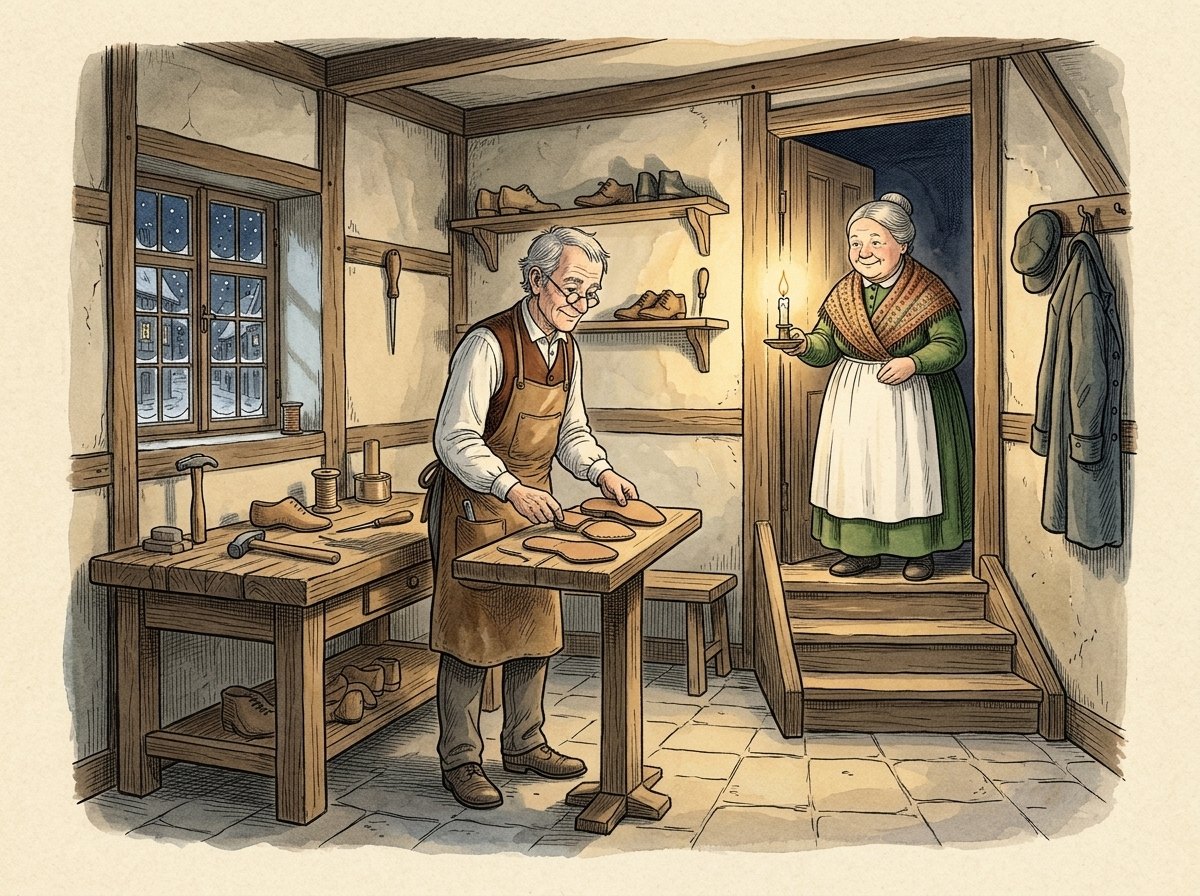
Once upon a time, there was a shoemaker who lived in a little town of half-timbered houses. He and his wife had become very poor. And it wasn’t their fault at all. There was only enough leather left for one single pair of shoes. Outside, snow lay on the ground. Soon it would be Christmas. In the evening, the shoemaker cut out the leather. He laid the pieces on his workbench. “Good night,” he said softly. Then he went peacefully to bed.
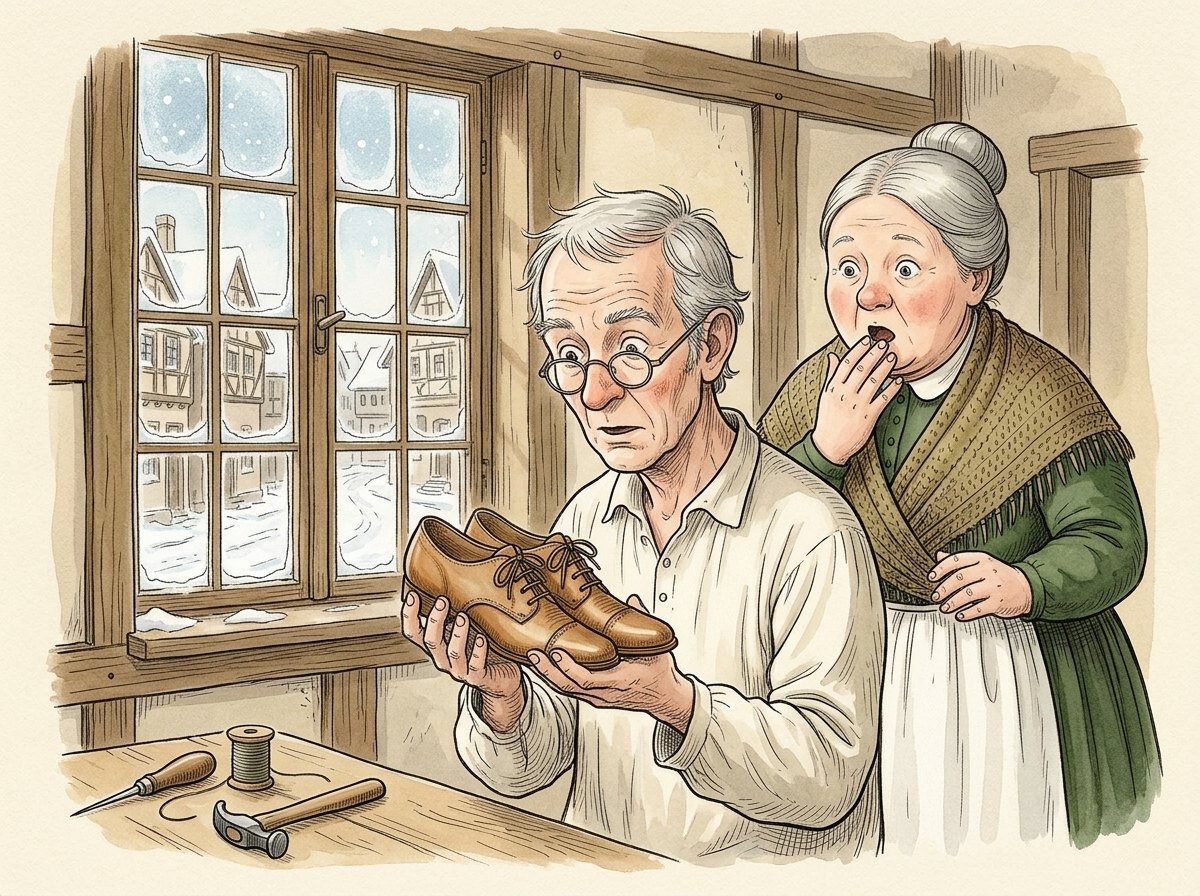
In the morning, the shoemaker rubbed his eyes. There on the workbench stood the shoes. All finished! He picked them up. Not one stitch was wrong, not a single one. “Wife, come quick!” he called. Soon a customer came into the workshop. He liked the shoes so much that he paid more than usual. Now the shoemaker could buy leather for two pairs.
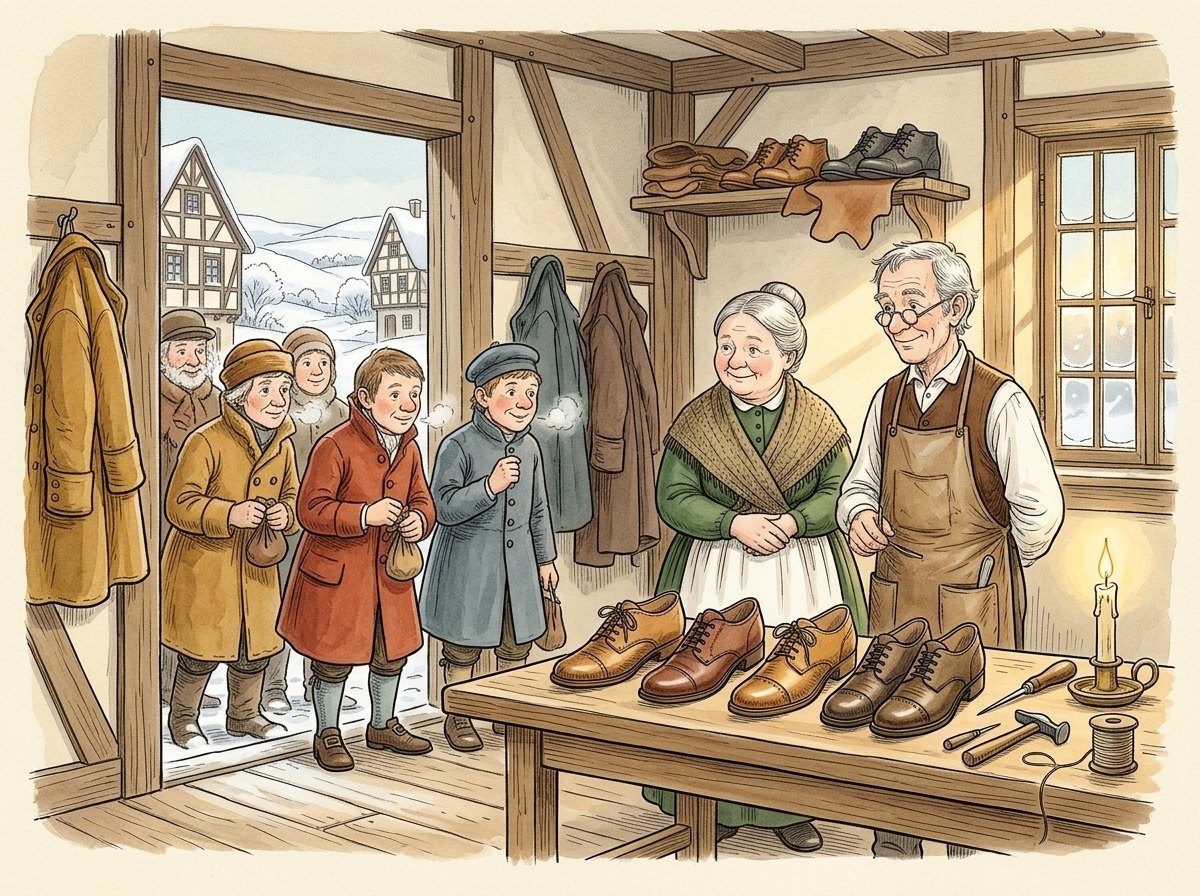
That evening, he cut out two pairs. In the morning, the shoes were finished. The next night, there were already four pairs. In the evening he cut, in the morning the shoes stood ready. In the evening he cut, in the morning the shoes stood ready. Who could be helping? People were happy to buy the shoes. Soon the shoemaker and his wife had enough to live on. On Sundays, there was even cake again.

Together: Ask together, very quietly: Who could be helping in the night?
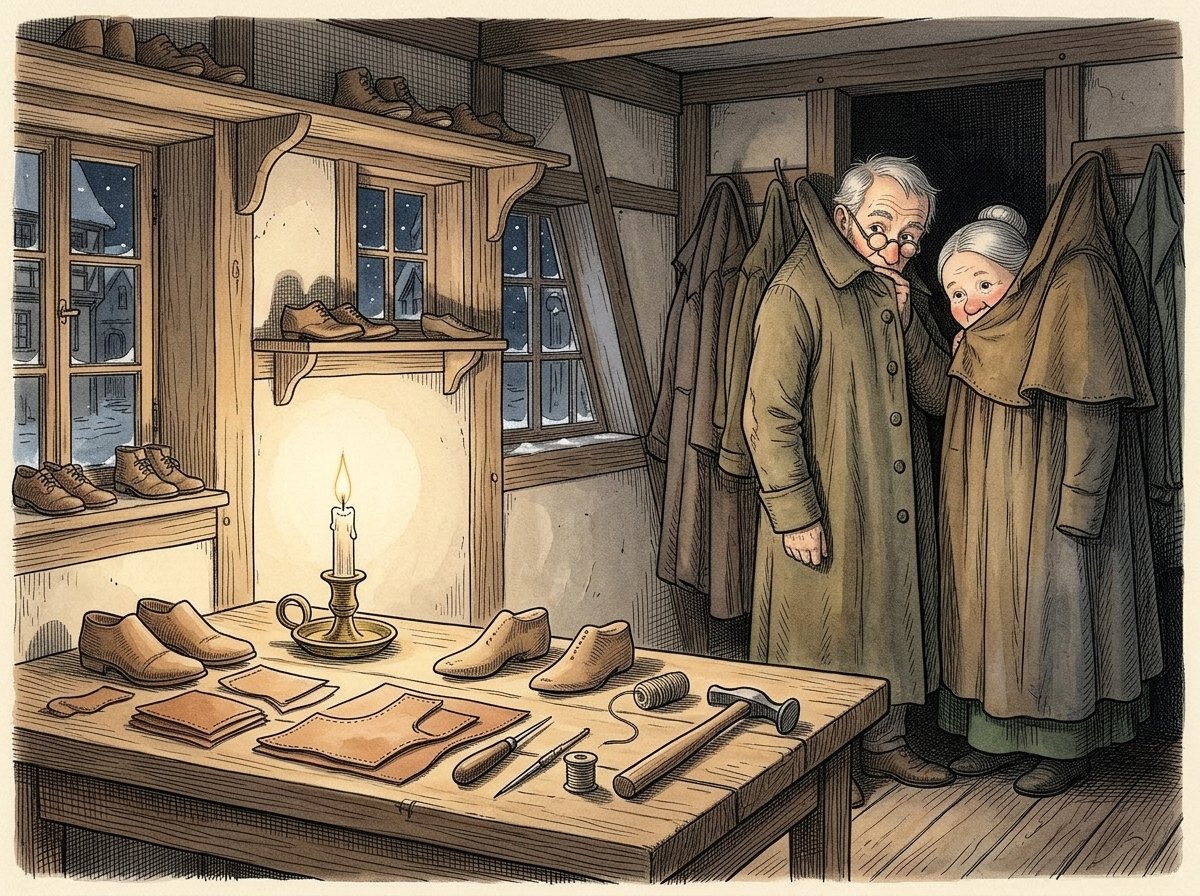
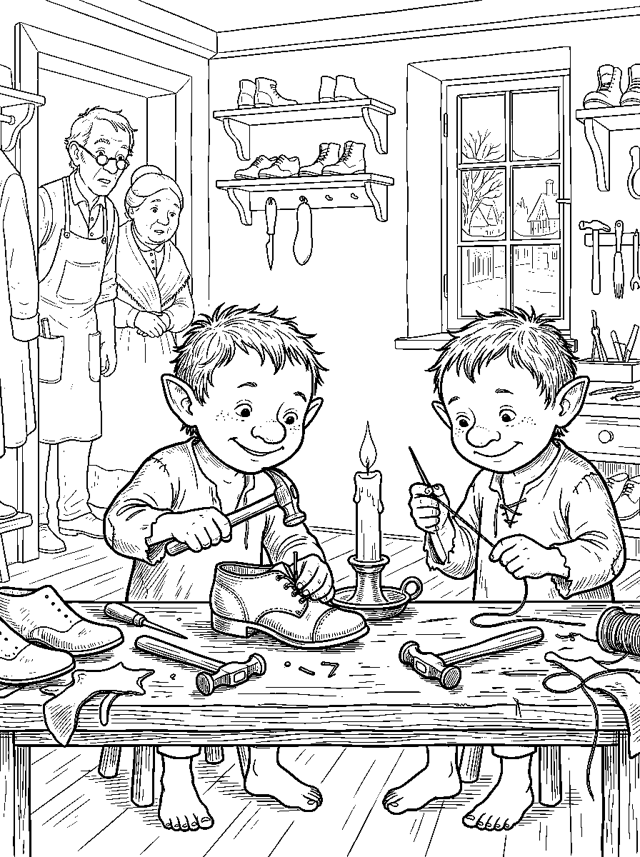
One evening, not long before Christmas, the wife looked at her husband. “Shall we stay up tonight and see who is helping us?” “Yes,” whispered the shoemaker. “I want to know too.” They lit a candle. Then they hid in the corner behind the coats. Only the tips of their noses peeked out. They waited, quiet as mice.
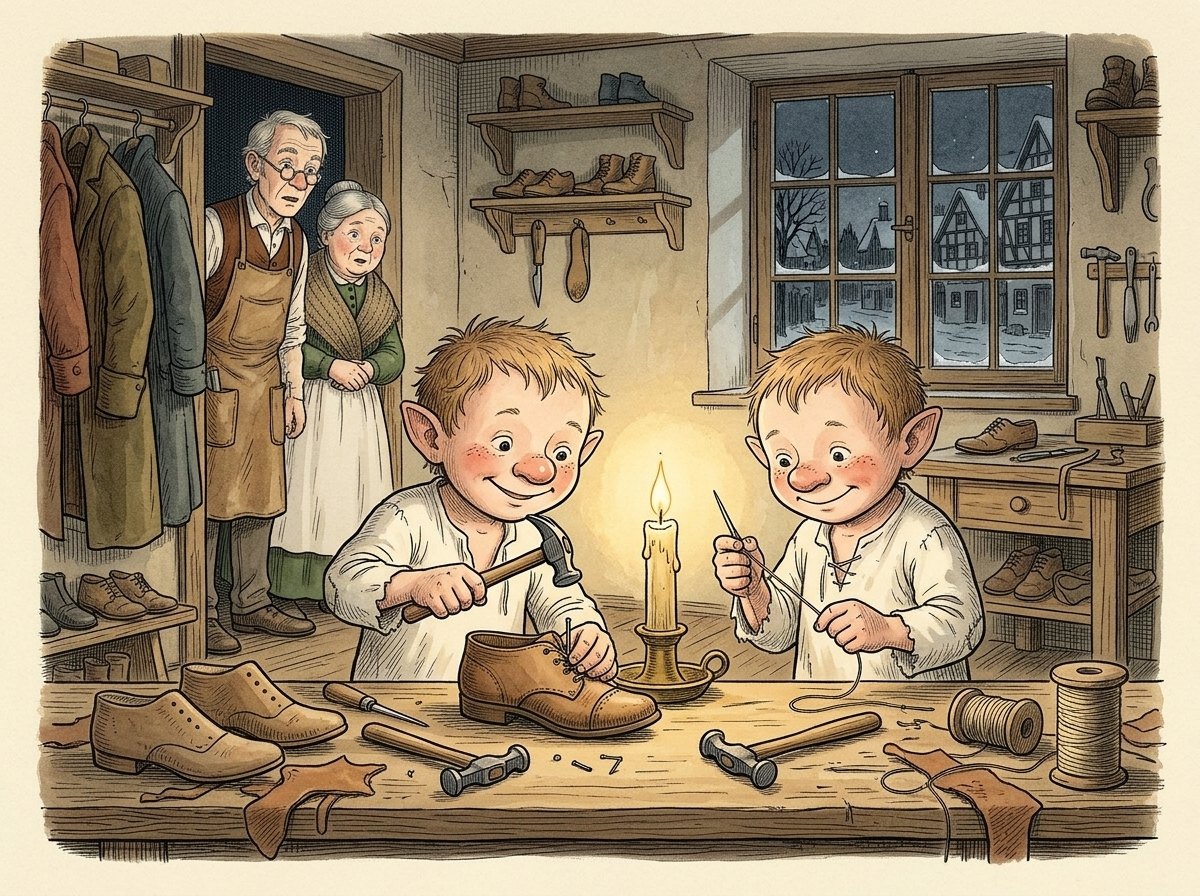
At midnight, the door opened softly. In scurried two tiny little men. They were barefoot and wore only thin, torn little shirts. They were shivering with cold. Quickly they sat down at the workbench. They stitched and sewed and hammered. Tip, tap, stitch by stitch! Tip, tap, stitch by stitch! The shoemaker could hardly believe his eyes. When everything was done, the little men skipped quickly away.

Together: Tap your finger on the blanket and say it along: Tip, tap, stitch by stitch!
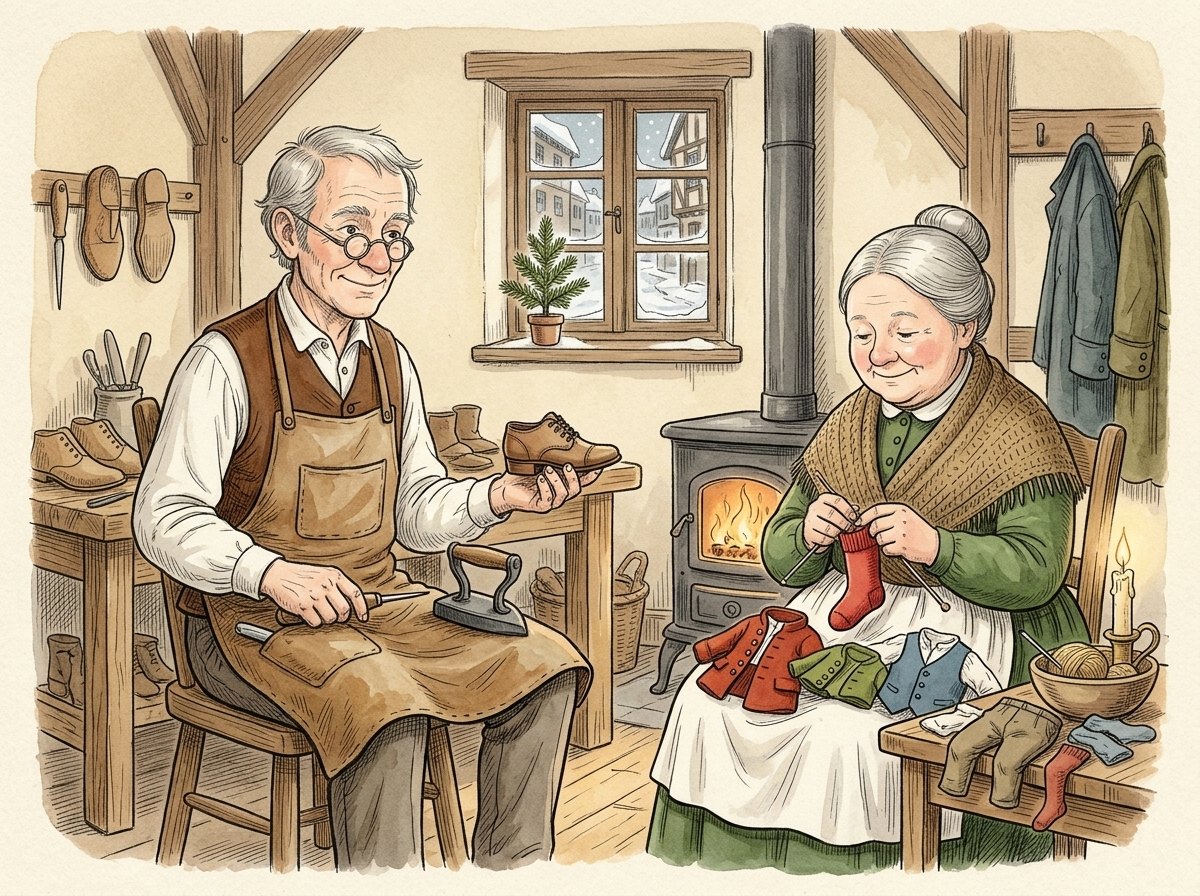
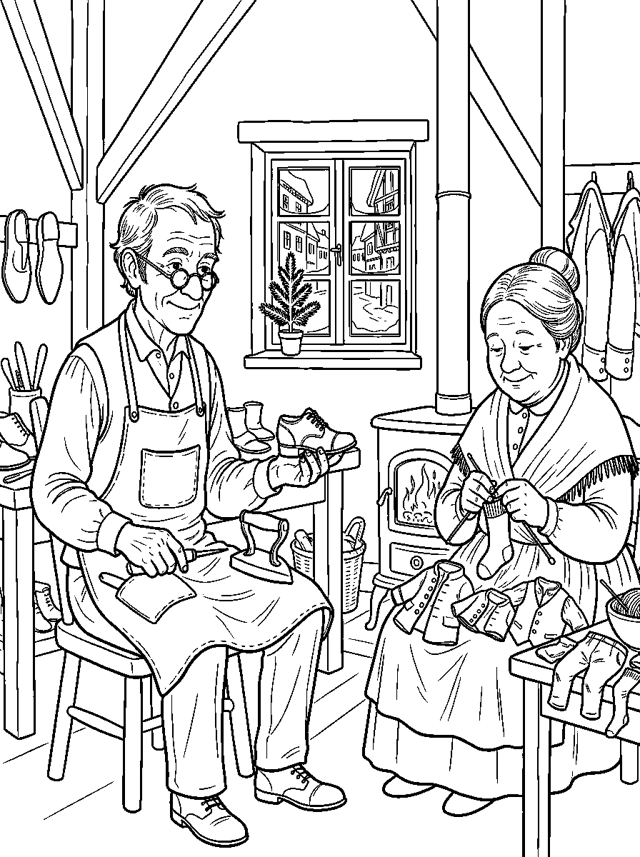
In the morning, the wife said, “The little men have made us rich. Let’s give them something to make them happy too. They’re so cold!” She sewed little shirts, little coats, vests and trousers. She knitted warm stockings. The shoemaker made two pairs of tiny shoes. Tip, tap, stitch by stitch – now they were the ones sewing. On Christmas Eve, they laid the presents on the workbench. This time there was no leather there. Then they hid again.

Together: Can you guess? What will the little men do when they find the presents?
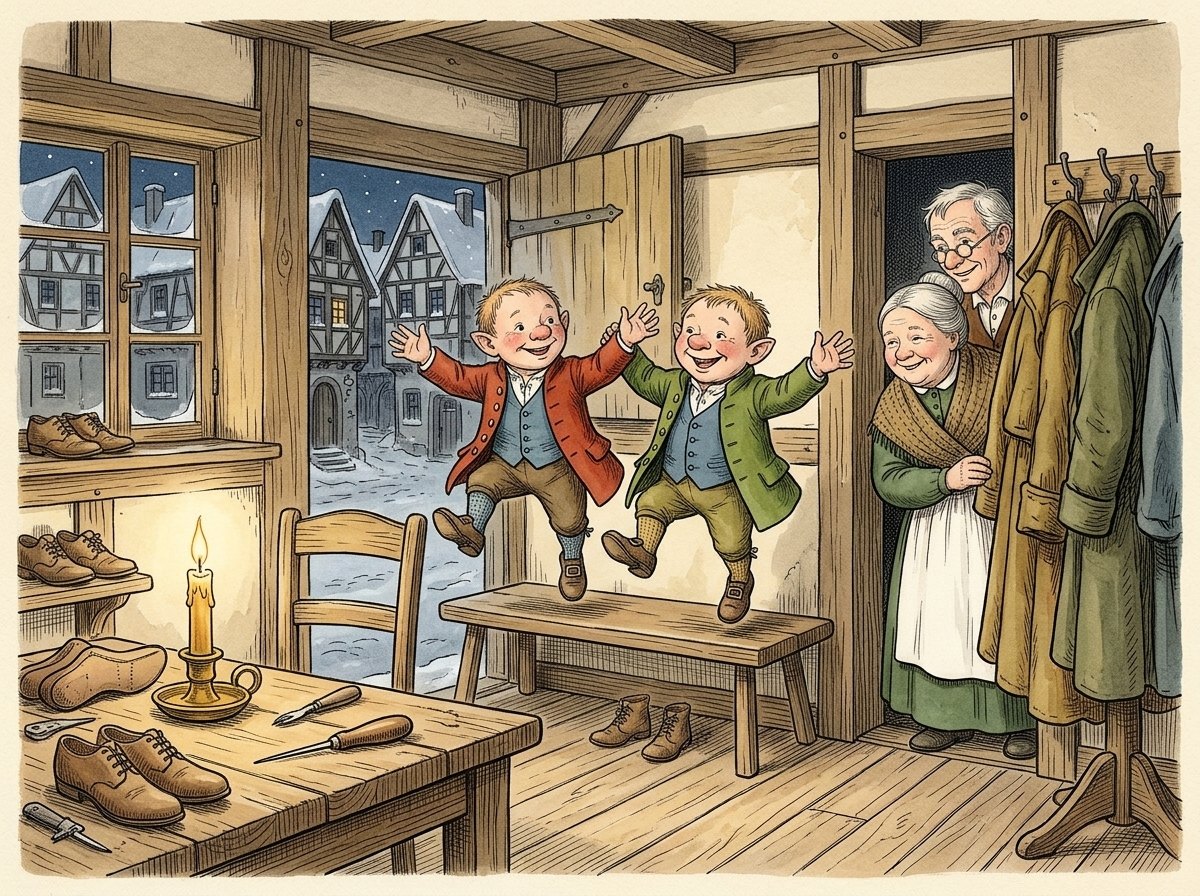
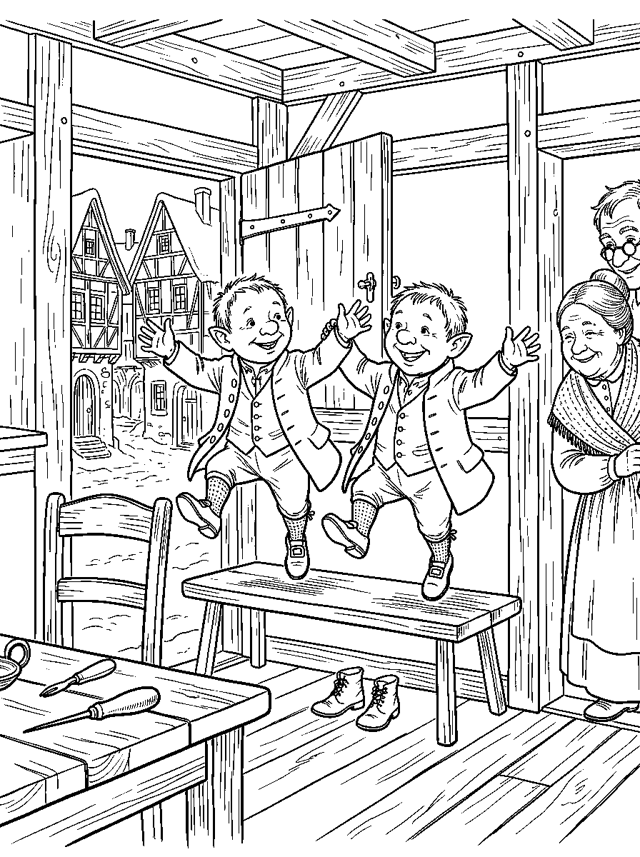
At midnight, the little men scurried in. They wanted to start work right away. But there was no leather – there were clothes! First they stared in wonder. Then they cheered. Quick as a wink, they put everything on and sang, “Now we are boys so fine to see, why should we longer cobblers be?” They hopped over chairs and benches. They danced round and round. And then they danced right out the door.
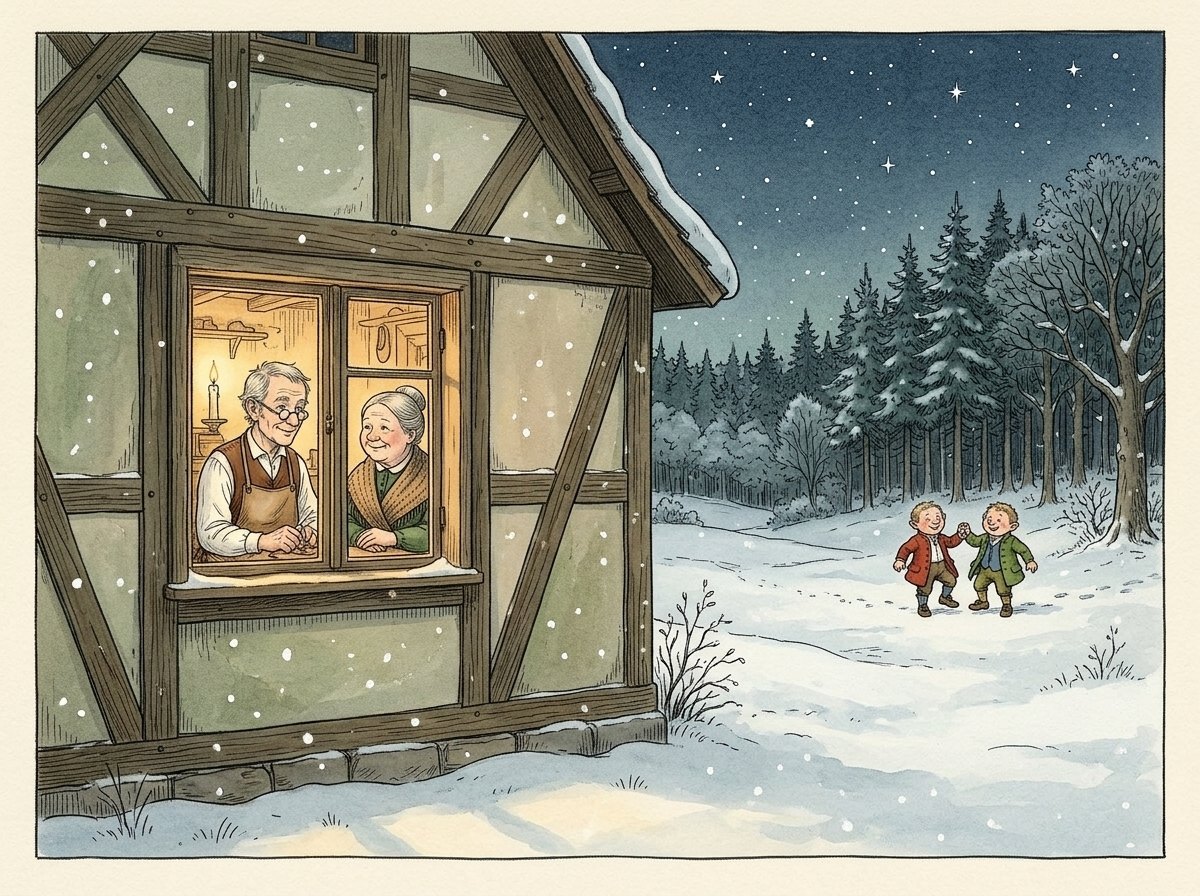
The elves never came back. But all went well with the shoemaker and his wife for as long as they lived. Outside, the snow fell softly. A candle glowed in the window. The shoemaker and his wife sat together and smiled at each other. And maybe, somewhere in the snowy forest, two little men are dancing still. They wear warm clothes and warm shoes. And they are never cold again.
And now… time to sleep

Sleep tight, snug and warm, as warm as the little elves in their new clothes – tip, tap, stitch by stitch.

Read the original text: „The Elves“

The tale as the Brothers Grimm published it, in Margaret Hunt's classic English translation of 1884, unabridged. Note: in places the original is much harsher than our bedtime version.

A shoemaker, by no fault of his own, had become so poor that at last he had nothing left but leather for one pair of shoes. So in the evening, he cut out the shoes which he wished to begin to make the next morning, and as he had a good conscience, he lay down quietly in his bed, commended himself to God, and fell asleep. In the morning, after he had said his prayers, and was just going to sit down to work, the two shoes stood quite finished on his table. He was astounded, and knew not what to say to it. He took the shoes in his hands to observe them closer, and they were so neatly made that there was not one bad stitch in them, just as if they were intended as a masterpiece. Soon after, a buyer came in, and as the shoes pleased him so well, he paid more for them than was customary, and, with the money, the shoemaker was able to purchase leather for two pairs of shoes. He cut them out at night, and next morning was about to set to work with fresh courage; but he had no need to do so, for, when he got up, they were already made, and buyers also were not wanting, who gave him money enough to buy leather for four pairs of shoes. The following morning, too, he found the four pairs made; and so it went on constantly, what he cut out in the evening was finished by the morning, so that he soon had his honest independence again, and at last became a wealthy man. Now it befell that one evening not long before Christmas, when the man had been cutting out, he said to his wife, before going to bed, “What think you if we were to stay up to-night to see who it is that lends us this helping hand?” The woman liked the idea, and lighted a candle, and then they hid themselves in a corner of the room, behind some clothes which were hanging up there, and watched. When it was midnight, two pretty little naked men came, sat down by the shoemaker’s table, took all the work which was cut out before them and began to stitch, and sew, and hammer so skilfully and so quickly with their little fingers that the shoemaker could not turn away his eyes for astonishment. They did not stop until all was done, and stood finished on the table, and they ran quickly away.

Next morning the woman said, “The little men have made us rich, and we really must show that we are grateful for it. They run about so, and have nothing on, and must be cold. I’ll tell thee what I’ll do: I will make them little shirts, and coats, and vests, and trousers, and knit both of them a pair of stockings, and do thou, too, make them two little pairs of shoes.” The man said, “I shall be very glad to do it;” and one night, when everything was ready, they laid their presents all together on the table instead of the cut-out work, and then concealed themselves to see how the little men would behave. At midnight they came bounding in, and wanted to get to work at once, but as they did not find any leather cut out, but only the pretty little articles of clothing, they were at first astonished, and then they showed intense delight. They dressed themselves with the greatest rapidity, putting the pretty clothes on, and singing,

“Now we are boys so fine to see, Why should we longer cobblers be?”

Then they danced and skipped and leapt over chairs and benches. At last they danced out of doors. From that time forth they came no more, but as long as the shoemaker lived all went well with him, and all his undertakings prospered.

Source: Brothers Grimm, Household Tales, translated by Margaret Hunt, London: George Bell 1884 — KHM 39

Coloring pages

The pictures from the tale as free coloring pages – simple for little ones, detailed for older kids. Print them or download the PDF.

For parents

The Brothers Grimm heard this story from Dortchen Wild of Kassel, in Hesse, Germany. It has appeared in their Children’s and Household Tales (Kinder- und Hausmärchen) since the very first edition of 1812 and is known today as KHM 39. Its German title is “Die Wichtelmänner” (say: dee VIKH-tel-men-er), which means “the little elf-men.” In many German-speaking families, the elves belong to Advent and Christmastime, and some children like to imagine little helpers scurrying through the house at night. You can read the Brothers Grimm’s original text below the story.

What we changed

In the Grimms’ tale, the little men wear no clothes at all; in our version they wear thin, torn little shirts and shiver with cold, so the gift of clothes still makes sense. We also tell only the first of the three short elf stories the Grimms collected under this title.

Retold by talino.kids after the first of the three stories of the Brothers Grimm's “The Elves” (KHM 39), final edition of 1857. The Grimms heard them from Dortchen Wild in Hesse.

Art style inspired by the Grimm illustrations of Otto Ubbelohde (1907–1909) and Ludwig Richter. AI-generated illustrations.

Text: retold and checked with AI · Pictures: AI-generated

The versions in other languages are machine-translated and checked by AI. Corrections are very welcome.

Report a mistake or a cultural concern

A story of their own for your child

talino.kids makes illustrated bedtime stories with your child as the hero – in English or German, optionally with a few words of a second language. Your first story is free.

Create a Free Story ✨

More tales by the Brothers Grimm