After the Brothers Grimm – set in today's world

The Golden Goose

age 5+ · 5 min read

Read in two languages:

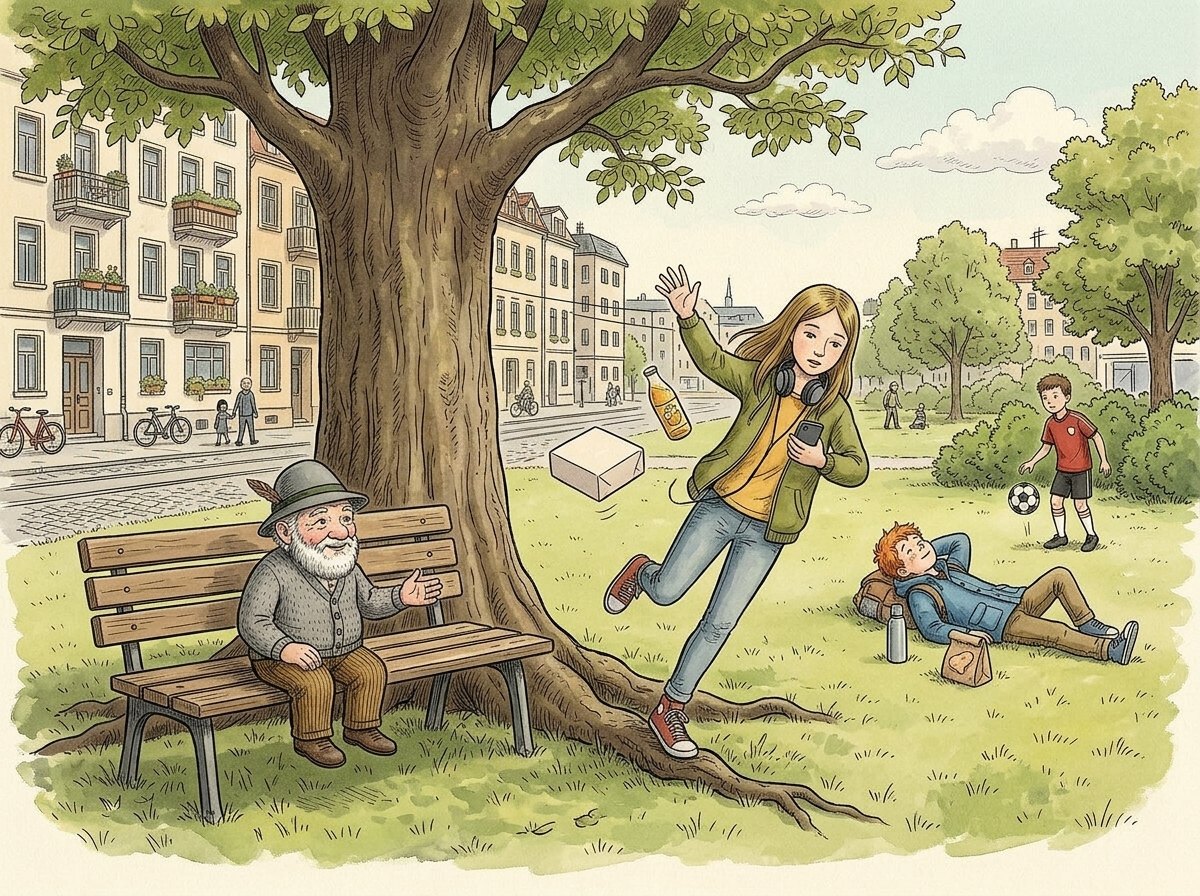
Once upon a time there was a boy named Jonas, the youngest of three. Because he loved to watch the clouds drift by, Lena and Max called him “Dreamer.” One Saturday, Mom sent all three of them to the town park. Lena went first, with cake and juice. Under the old linden tree sat a little gray man in a hat. “Do give me a piece of your cake. I am so hungry.” “No time!” said Lena, eyes on her phone. Whoops! She tripped right over a root.
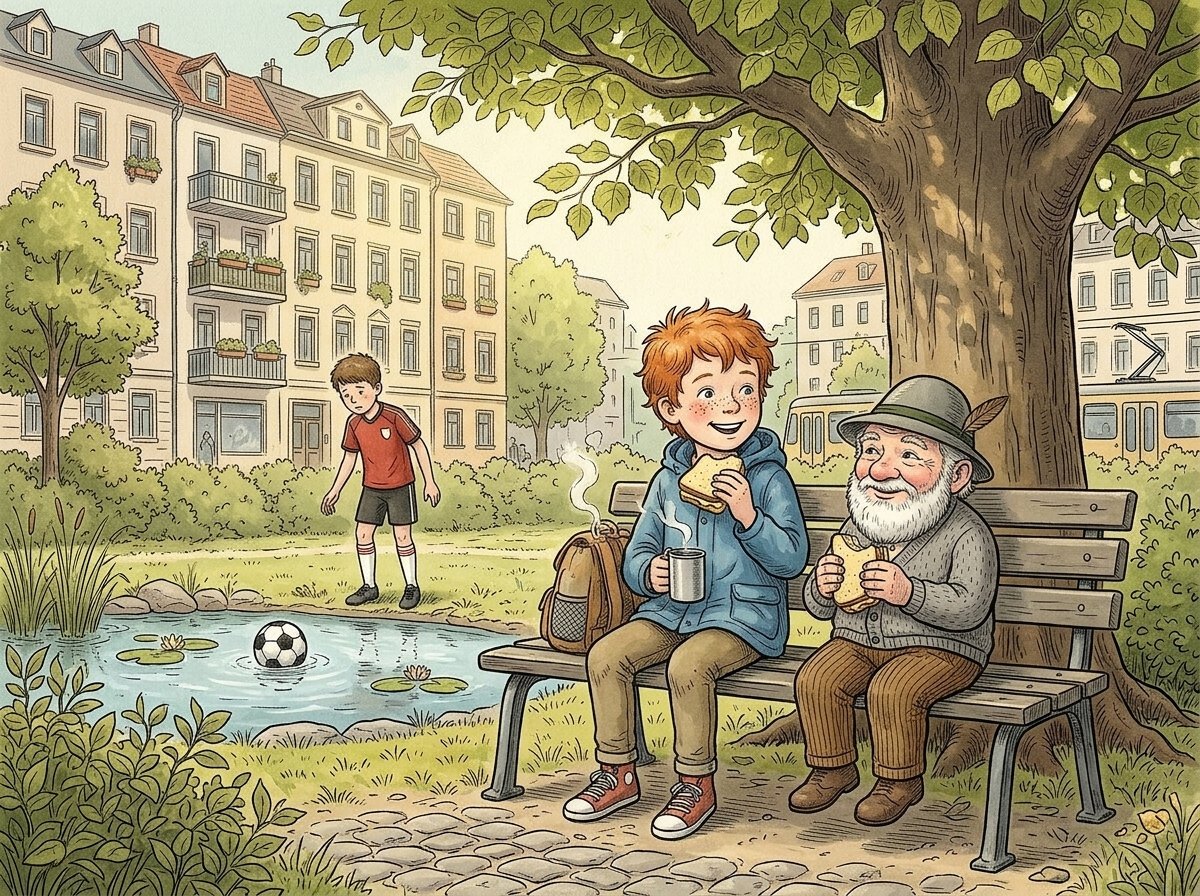
Then along came Max with his soccer ball. “Won’t you give me a bite?” asked the little man. “Buy your own!” shouted Max. He kicked the ball, and splish, splash, it flew straight into the pond. Last of all came Jonas. He had only a crumbly cheese sandwich and some lukewarm cocoa. “It isn’t much, but we can share.” They unpacked it. And it was the best sandwich in the whole world. The cocoa was hot and sweet.
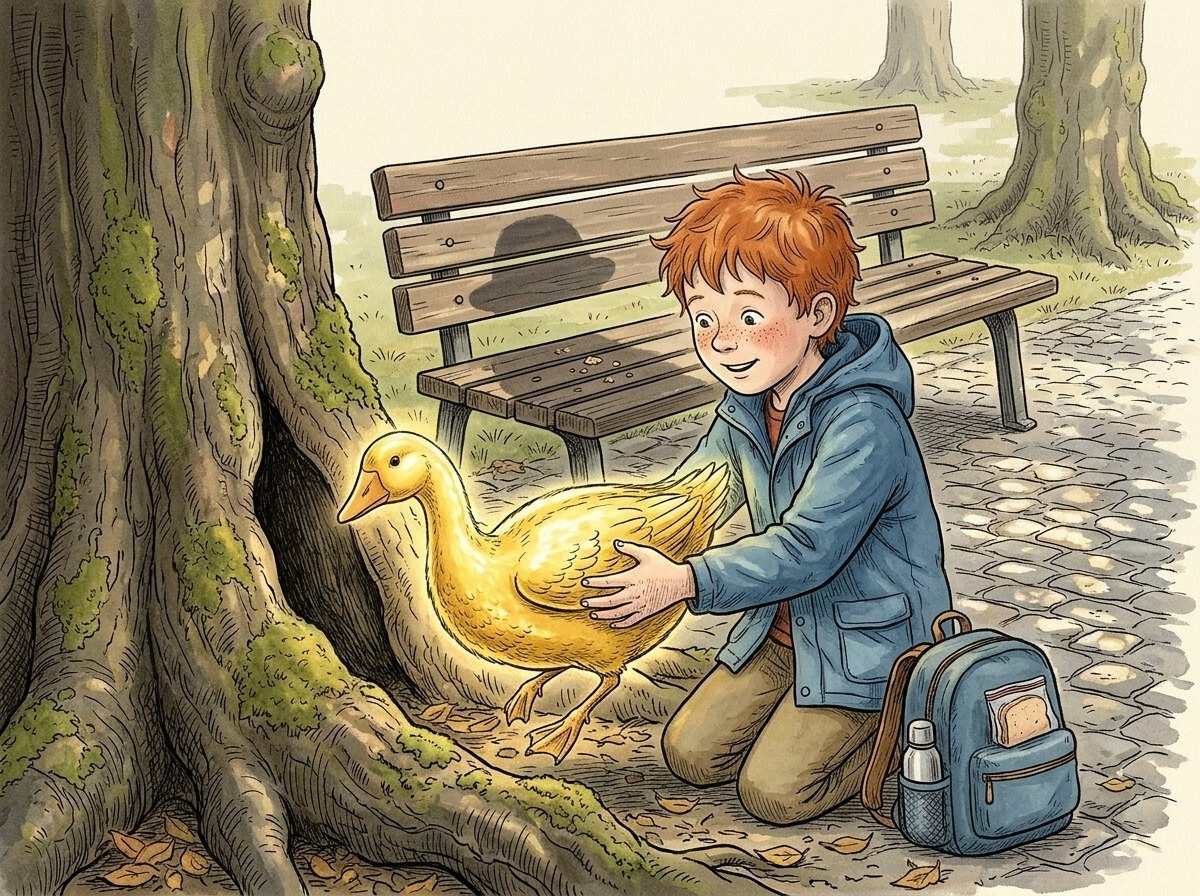
The little man brushed the crumbs from his beard. “Since you have a good heart, look under the roots of the old linden tree.” And then the bench was empty. Jonas knelt down. Between the roots was a hollow. In it sat a goose. Her feathers were of pure gold! “Well, hello there,” whispered Jonas. Very gently, he lifted her into his arms. The goose honked softly. Then Jonas strolled into town with her.
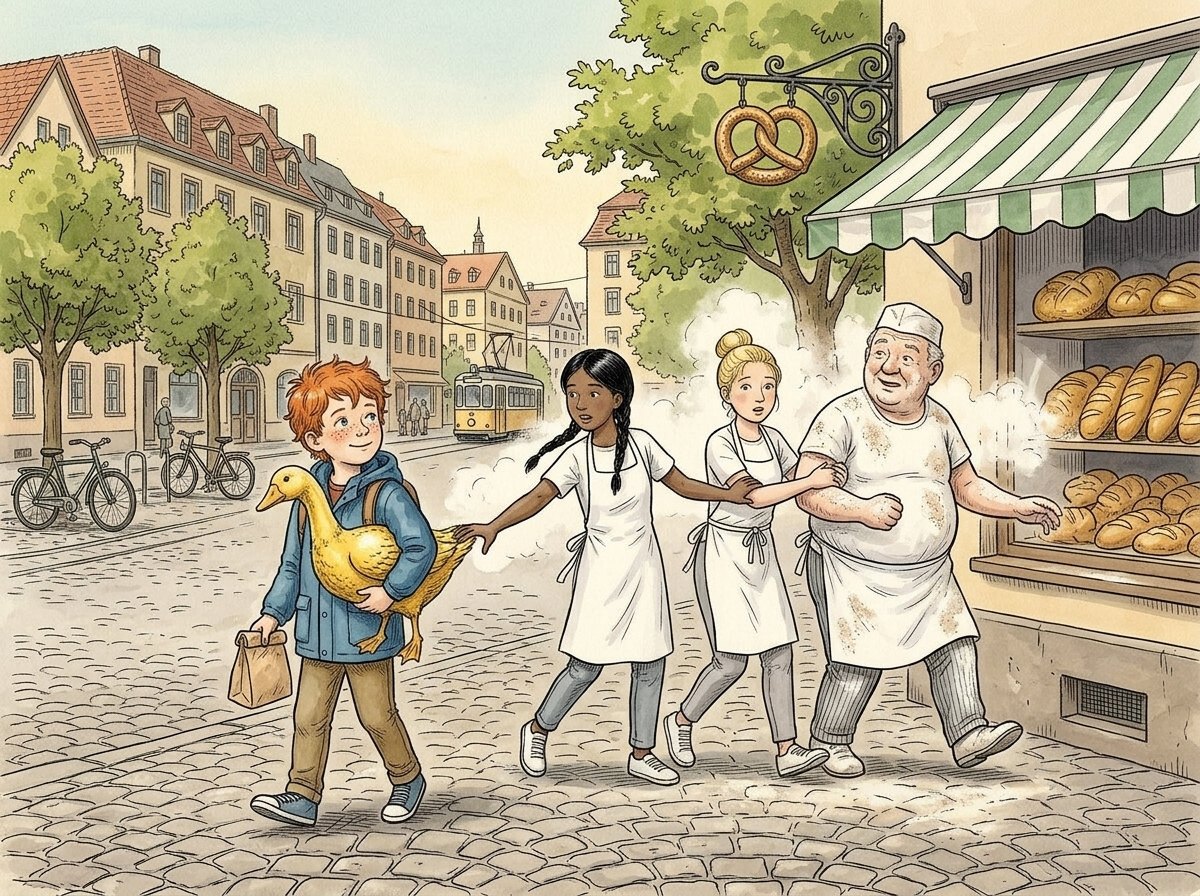
In front of the bakery stood the baker’s two daughters. They saw the golden feathers gleaming. “Just one little feather!” whispered the first. She grabbed, and her hand stuck tight. And she stuck fast! Her sister tugged at her. And she stuck fast! The baker came out in his floury apron and took hold of his daughter. And he stuck fast! Jonas walked calmly on, as if nothing had happened. The three of them stumbled along behind.

Together: Say it together every time someone gets stuck: And she stuck fast! And he stuck fast!
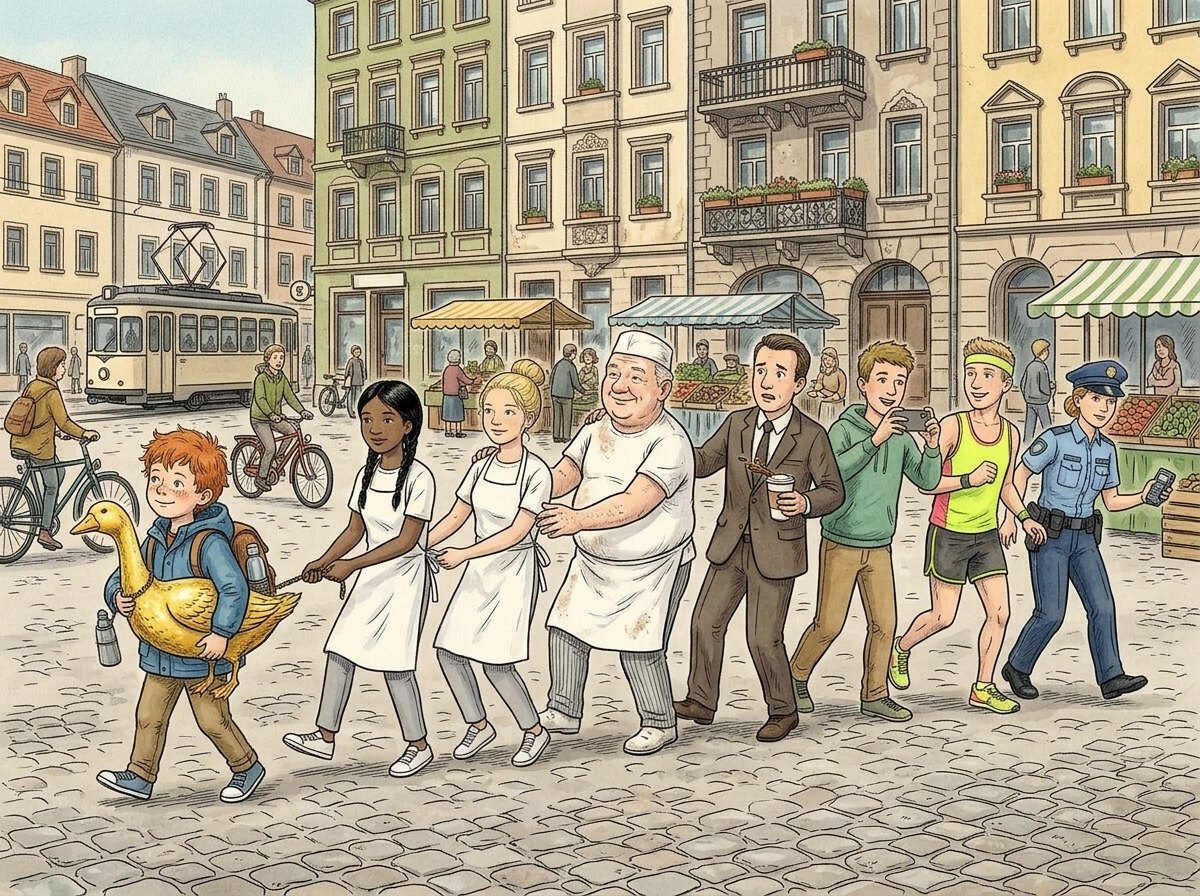
A man in a suit hurried across the market square, a coffee cup in his hand. “I’ll help!” he called, and grabbed hold. And he stuck fast! Slosh, went the coffee. A young man was filming everything. “I have to show this!” Bump, he bumped right into them. And he stuck fast! A jogger in neon yellow ran past. And she stuck fast! A parking officer wanted to give the goose a ticket. And she stuck fast! The whole chain hopped and wobbled along behind Jonas.

Together: Shout the refrain together for every new person who gets stuck, and make the coffee go slosh!
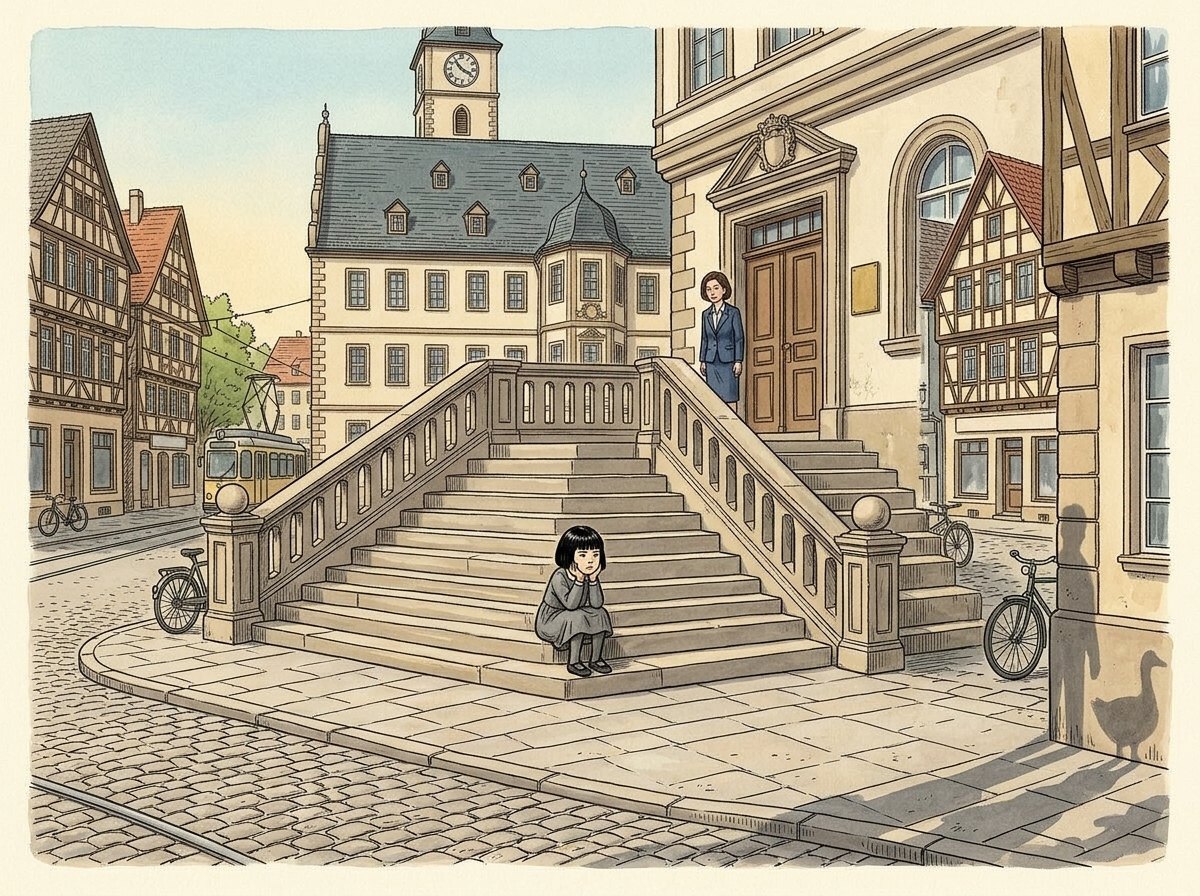
This town had a mayor. Her daughter Clara was so serious that no one could make her laugh. No joke worked, no funny face, no tickling. So the mayor had made a promise: “Whoever makes Clara laugh gets one wish.” That Saturday, Clara was sitting on the town hall steps. She rested her chin in her hands. Her face was serious, very, very serious. Then she heard something: tap, tap, slosh, bump.

Together: Both of you make the most serious face in the world, just like Clara. Who laughs first?
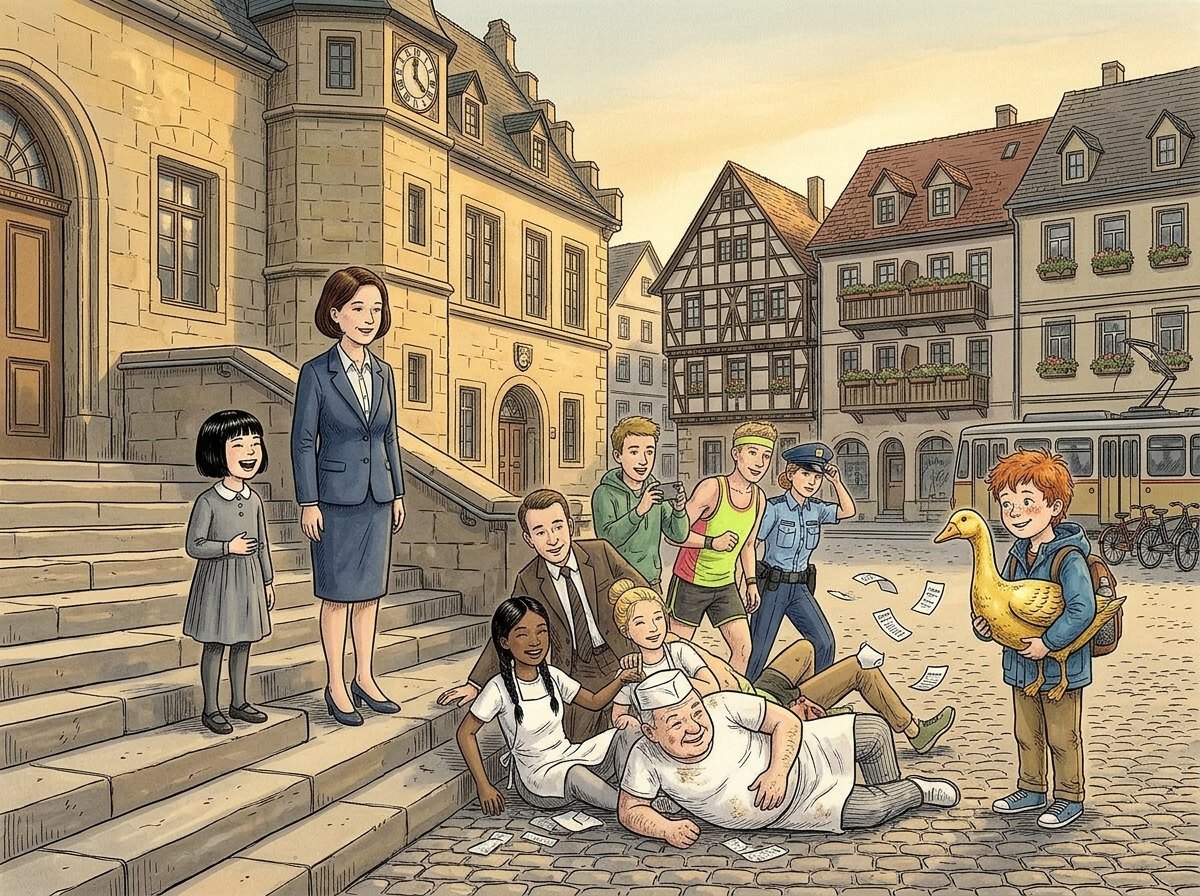
Here came Jonas with his wobbly parade. The jogger was jogging on the spot. The coffee sloshed. The young man hung upside down, filming himself. And the parking officer was handing out tickets to everyone. Clara looked. The corner of her mouth twitched. Then she laughed, so loudly that the whole square could hear it. Plop! At the sound of her laugh, everyone came unstuck and tumbled into a heap. And then they all laughed along with her.
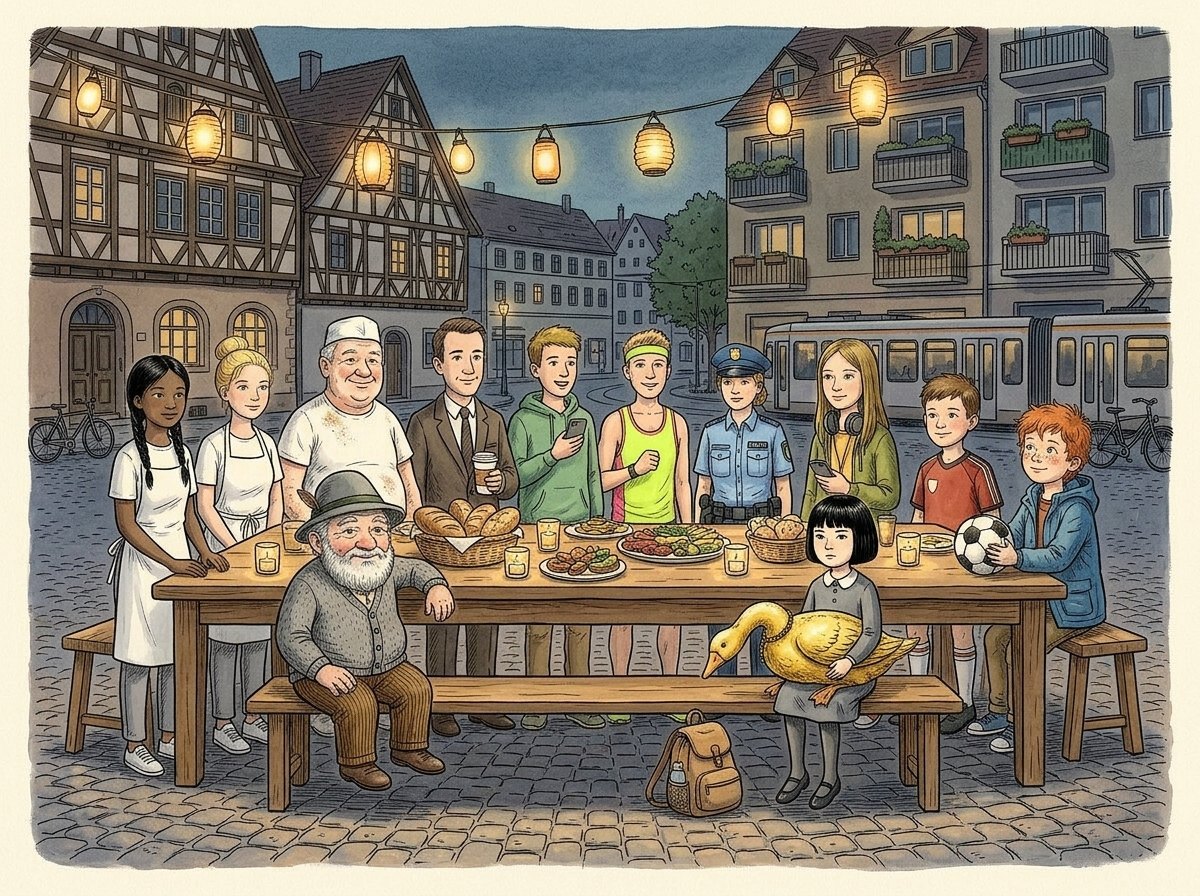
Jonas got to make a wish. “A long table on the market square,” he said. “And everyone eats together.” At the head of the table sat the little gray man. Next to him sat the baker with his daughters, the jogger and the parking officer. Lena and Max said quietly, “We’re sorry.” Clara held the golden goose on her lap. And from then on, nobody ever called him “Dreamer” to tease him again. In the evening, lanterns glowed above the table. The golden feathers shimmered softly.
And now… time to sleep

Sleep tight, little dreamer, and who knows, maybe a golden feather will shimmer in your dreams tonight.

Read the original text: „The Golden Goose“

The tale as the Brothers Grimm published it, in Margaret Hunt's classic English translation of 1884, unabridged. Note: in places the original is much harsher than our bedtime version.

There was a man who had three sons, the youngest of whom was called Dummling, and was despised, mocked, and put down on every occasion.

It happened that the eldest wanted to go into the forest to hew wood, and before he went his mother gave him a beautiful sweet cake and a bottle of wine in order that he might not suffer from hunger or thirst.

When he entered the forest there met him a little grey-haired old man who bade him good-day, and said, “Do give me a piece of cake out of your pocket, and let me have a draught of your wine; I am so hungry and thirsty.” But the prudent youth answered, “If I give you my cake and wine, I shall have none for myself; be off with you,” and he left the little man standing and went on.

But when he began to hew down a tree, it was not long before he made a false stroke, and the axe cut him in the arm, so that he had to go home and have it bound up. And this was the little grey man’s doing.

After this the second son went into the forest, and his mother gave him, like the eldest, a cake and a bottle of wine. The little old grey man met him likewise, and asked him for a piece of cake and a drink of wine. But the second son, too, said with much reason, “What I give you will be taken away from myself; be off!” and he left the little man standing and went on. His punishment, however, was not delayed; when he had made a few strokes at the tree he struck himself in the leg, so that he had to be carried home.

Then Dummling said, “Father, do let me go and cut wood.” The father answered, “Your brothers have hurt themselves with it, leave it alone, you do not understand anything about it.” But Dummling begged so long that at last he said, “Just go then, you will get wiser by hurting yourself.” His mother gave him a cake made with water and baked in the cinders, and with it a bottle of sour beer.

When he came to the forest the little old grey man met him likewise, and greeting him, said, “Give me a piece of your cake and a drink out of your bottle; I am so hungry and thirsty.” Dummling answered, “I have only cinder-cake and sour beer; if that pleases you, we will sit down and eat.” So they sat down, and when Dummling pulled out his cinder-cake, it was a fine sweet cake, and the sour beer had become good wine. So they ate and drank, and after that the little man said, “Since you have a good heart, and are willing to divide what you have, I will give you good luck. There stands an old tree, cut it down, and you will find something at the roots.” Then the little man took leave of him.

Dummling went and cut down the tree, and when it fell there was a goose sitting in the roots with feathers of pure gold. He lifted her up, and taking her with him, went to an inn where he thought he would stay the night. Now the host had three daughters, who saw the goose and were curious to know what such a wonderful bird might be, and would have liked to have one of its golden feathers.

The eldest thought, “I shall soon find an opportunity of pulling out a feather,” and as soon as Dummling had gone out she seized the goose by the wing, but her finger and hand remained sticking fast to it.

The second came soon afterwards, thinking only of how she might get a feather for herself, but she had scarcely touched her sister than she was held fast.

At last the third also came with the like intent, and the others screamed out, “Keep away; for goodness’ sake keep away!” But she did not understand why she was to keep away. “The others are there,” she thought, “I may as well be there too,” and ran to them; but as soon as she had touched her sister, she remained sticking fast to her. So they had to spend the night with the goose.

The next morning Dummling took the goose under his arm and set out, without troubling himself about the three girls who were hanging on to it. They were obliged to run after him continually, now left, now right, just as he was inclined to go.

In the middle of the fields the parson met them, and when he saw the procession he said, “For shame, you good-for-nothing girls, why are you running across the fields after this young man? is that seemly?” At the same time he seized the youngest by the hand in order to pull her away, but as soon as he touched her he likewise stuck fast, and was himself obliged to run behind.

Before long the sexton came by and saw his master, the parson, running behind three girls. He was astonished at this and called out, “Hi, your reverence, whither away so quickly? do not forget that we have a christening to-day!” and running after him he took him by the sleeve, but was also held fast to it.

Whilst the five were trotting thus one behind the other, two labourers came with their hoes from the fields; the parson called out to them and begged that they would set him and the sexton free. But they had scarcely touched the sexton when they were held fast, and now there were seven of them running behind Dummling and the goose.

Soon afterwards he came to a city, where a king ruled who had a daughter who was so serious that no one could make her laugh. So he had put forth a decree that whosoever should be able to make her laugh should marry her. When Dummling heard this, he went with his goose and all her train before the King’s daughter, and as soon as she saw the seven people running on and on, one behind the other, she began to laugh quite loudly, and as if she would never leave off. Thereupon Dummling asked to have her for his wife, and the wedding was celebrated. After the King’s death, Dummling inherited the kingdom and lived a long time contentedly with his wife.

Source: Brothers Grimm, Household Tales, translated by Margaret Hunt, London: George Bell 1884 — KHM 64

For parents

This story retells the fairy tale “Die goldene Gans” (dee GOL-deh-neh GAHNTS, “The Golden Goose”), number 64 in the Brothers Grimm’s “Kinder- und Hausmärchen” (Children’s and Household Tales). The Grimms wrote it down from a story told in Hesse, perhaps by the Hassenpflug family, and another from the area around Paderborn. It fits our times surprisingly well: sharing with a stranger is as rare today as it was back then, and children know all about grabbing for gold, filming instead of helping, and teasing the family dreamer. That is why our version is deliberately set in a German town of today, with a bakery, a market square and a town hall. The names are said like this: Jonas (YO-nahs), Lena (LAY-nah), Max (mahks), Clara (KLAH-rah). Below the story you can read the Grimms’ original text and compare.

What stayed – and what's new

Kept

  • the youngest everyone laughs at
  • the little grey man who asks for a bite to eat
  • the stingy older ones and the youngest who shares
  • the golden goose under the old tree
  • everyone who touches the goose sticks
  • the serious girl who finally laughs

New

  • forest → town park, inn → bakery
  • parson, sexton, farmers → coffee-to-go man, phone filmer, jogger, parking officer
  • axe injuries → a stumble and a ball in the pond
  • king and wedding → the mayor and a free wish
  • the wish: a long table where everyone eats together

Sharing with a stranger is as rare today as it was then. Grabbing for gold, filming instead of helping, teasing the family dreamer – children today know all of that.

Freely retold after the Brothers Grimm's “The Golden Goose” (KHM 64), final edition of 1857 – carried into today by talino.kids.

Art style inspired by the Grimm illustrations of Otto Ubbelohde (1907–1909) and Ludwig Richter – carried into today. AI-generated illustrations.

Text: retold and checked with AI · Pictures: AI-generated

The versions in other languages are machine-translated and checked by AI. Corrections are very welcome.

Report a mistake or a cultural concern

A story of their own for your child

talino.kids makes illustrated bedtime stories with your child as the hero – in English or German, optionally with a few words of a second language. Your first story is free.

Create a Free Story ✨

More Grimm for today